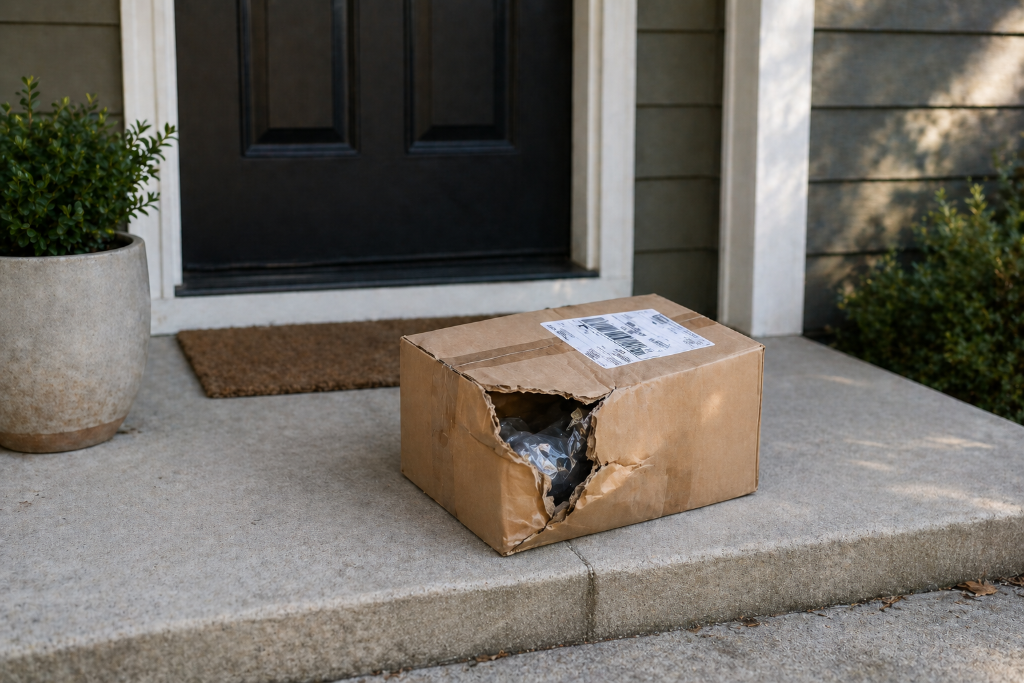
For many retailers, lost, stolen, or damaged packages are simply treated as a cost of doing business.
A customer reaches out, the order never arrived or arrived damaged, and the retailer sends a replacement. It feels like good customer service, but behind the scenes, it can quietly eat into margins.
The Hidden Cost of Replacements
Let's say a customer places a $100 order.
- Retail price: $100
- Cost to retailer: $50
- Gross profit: $50
If that package is lost, stolen, or damaged and the retailer sends a free replacement, the retailer now has to cover the cost of the second item, plus shipping, packaging, and operational costs.
In that scenario, the retailer may break even at best, and often loses money.
A Better Model: Customer-Opted Shipping Insurance
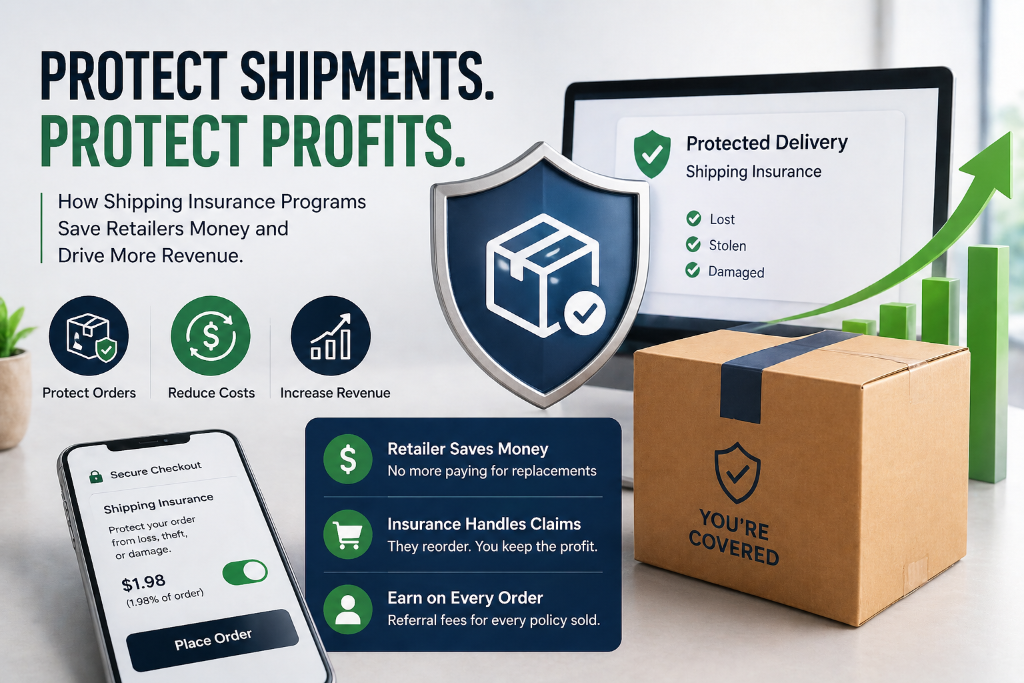
Shipping insurance gives customers the option to protect their order at checkout for a small percentage of the order total.
If something happens to the package, the shipping insurance provider handles the replacement or resolution, instead of the retailer absorbing the cost.
Revnu can help retailers evaluate and facilitate these programs with the right provider.
Why This Changes the Economics
In many cases, when a replacement is needed, the insurance provider does not buy the product at cost. Instead, they place a new order directly through the retailer's website.
That means the retailer records another sale.
Using the same example:
- Original customer order: $100
- Replacement order placed by insurance provider: $100
- Potential gross profit on each order: $50
Instead of sending a free replacement and losing margin, the retailer gets a second paid order.
Additional Revenue From Referrals
There may also be opportunities for retailers to earn referral fees when customers opt into shipping insurance.
While revenue share models around insurance products can have legal and regulatory limitations, some providers may offer a referral fee structure.
For example, if a retailer earns $0.50 for each customer who selects shipping insurance, that can become meaningful at scale.
- 10,000 insured orders = $5,000
- 100,000 insured orders = $50,000
- 500,000 insured orders = $250,000
The Benefits for Retailers
A well-structured shipping insurance program can help retailers in several ways:
- Reduce the cost of replacing lost, stolen, or damaged packages
- Protect margins on orders that would otherwise require free replacements
- Generate new revenue through replacement purchases
- Create referral fee income from customers who opt in
- Improve the customer experience by making claims easier to resolve
Better for Customers, Too
Customers also benefit from having a clear protection option at checkout.
Instead of wondering whether a retailer will make an exception or manually approve a replacement, customers know their order is protected if something goes wrong.
That peace of mind can increase confidence at checkout and create a better post-purchase experience.
Final Thought
Lost, stolen, and damaged packages do not need to remain a hidden margin drain for retailers.
By offering customer-opted shipping insurance, retailers can shift replacement costs to a third-party provider, turn replacements into new paid orders, and potentially generate referral revenue on every protected checkout.
For retailers looking to improve margins without disrupting the customer experience, shipping insurance is a simple program worth exploring.